Concept · Foundations
Mixing Light vs. Mixing Paint
Additive mixing, as with lights, adds wavelengths with each new color; subtractive mixing, as with pigments, takes more away with each one.
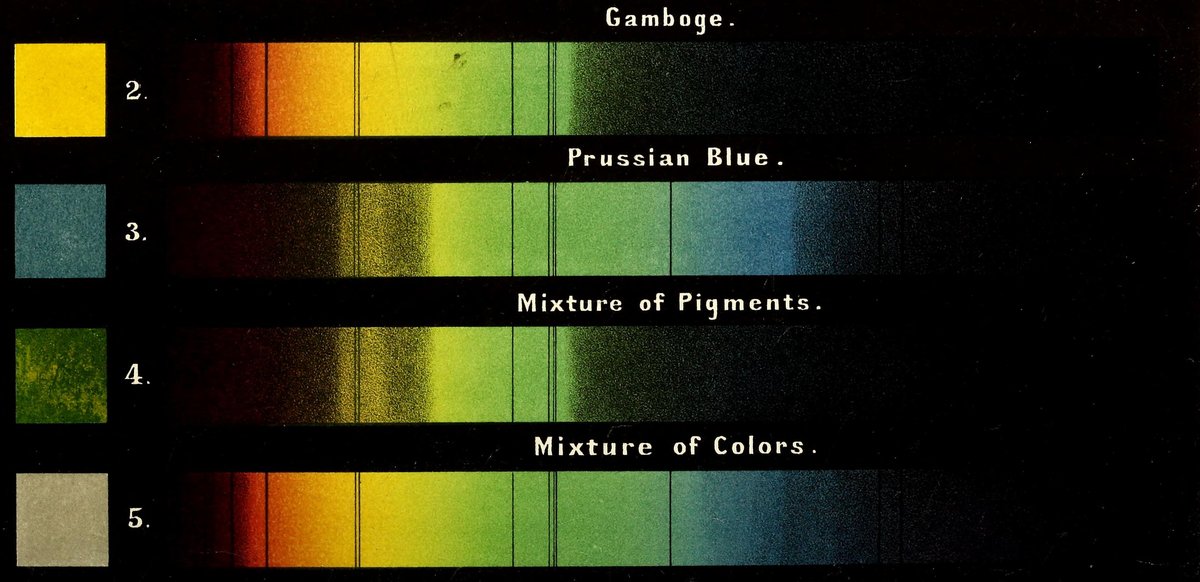
Wilhelm von Bezold, a German physicist, tested this with gamboge yellow and Prussian blue: mixed as paint, only the green both reflect survives; mixed as light in the eye, they add to a dim white that reads as gray. Screens add red, green and blue light; printers subtract with cyan, magenta and yellow inks.
- Look at a phone screen through a strong magnifier: tiny glowing red, green and blue points, not blended color.
- In paint, only a color lighter than the mix raises its value.
- Real paints mix less cleanly than ideal inks: red, yellow and blue together give a dark brown.
Image: Smithsonian Libraries via Internet Archive · Public domain