History · Foundations
Chevreul and Colors Side by Side
Michel-Eugène Chevreul, the chemist in charge of dyeing at the Gobelins tapestry works in Paris, set out his law of simultaneous contrast, on how neighboring colors alter each other, in a book of 1839.
Complaints came in that his black wools looked weak in blue and violet draperies. Blacks from other workshops proved no better: the fault lay not in the dye but in the hues around the black. Years of work on that finding grew into the book.
- Charles Martel's English translation of 1854 carried the book to British readers.
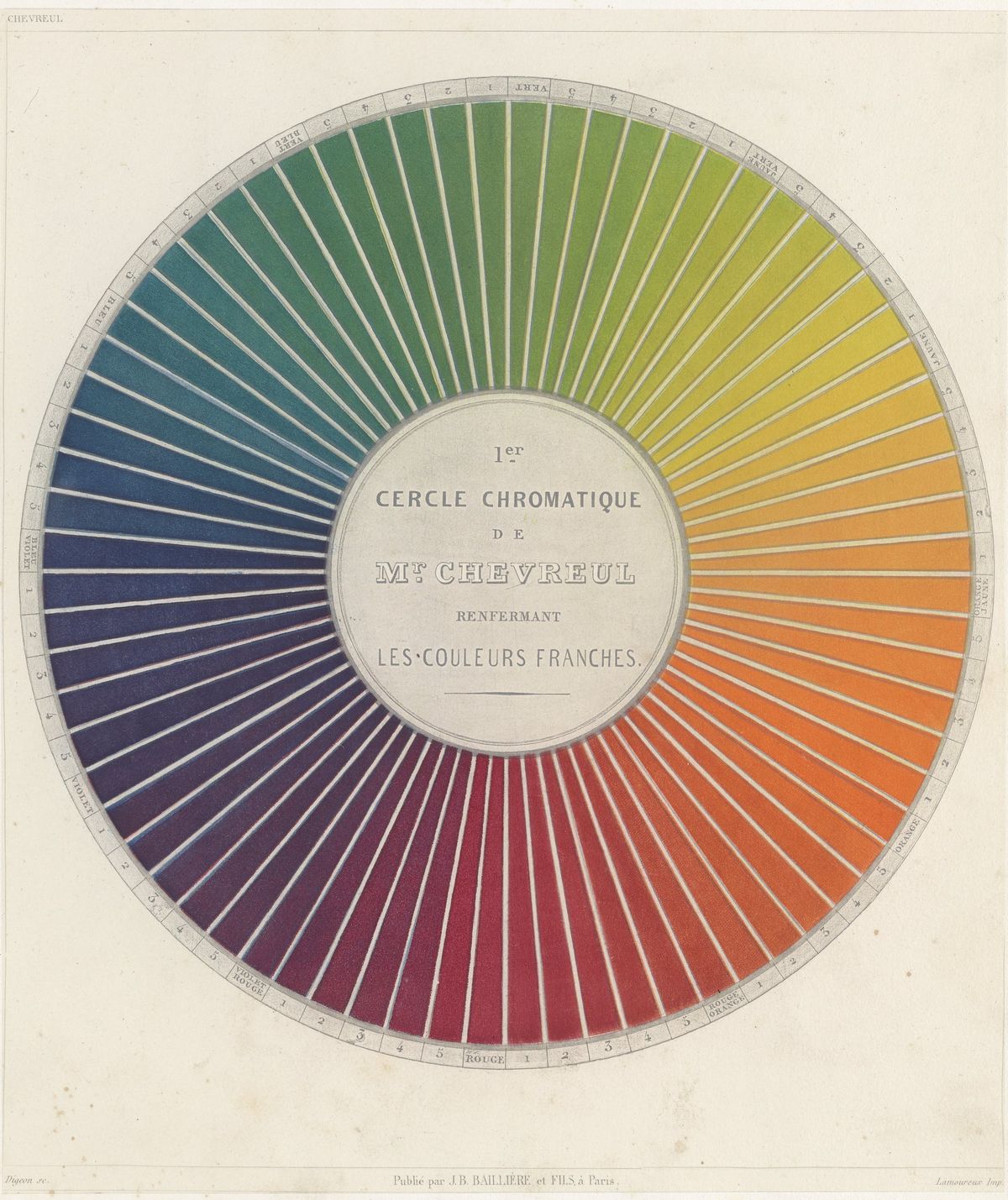
- This ring of 72 pure hues comes from a later volume of 1864 on color in the industrial arts.
- The effect itself is explained on the Simultaneous Contrast page, in the module on interaction.
Image: Science History Institute Digital Collections · Public domain