Order and Science
Neo-Impressionism: Seurat, Signac and the Science of Color
Color theory turned into a working method, from Paris to Brussels.
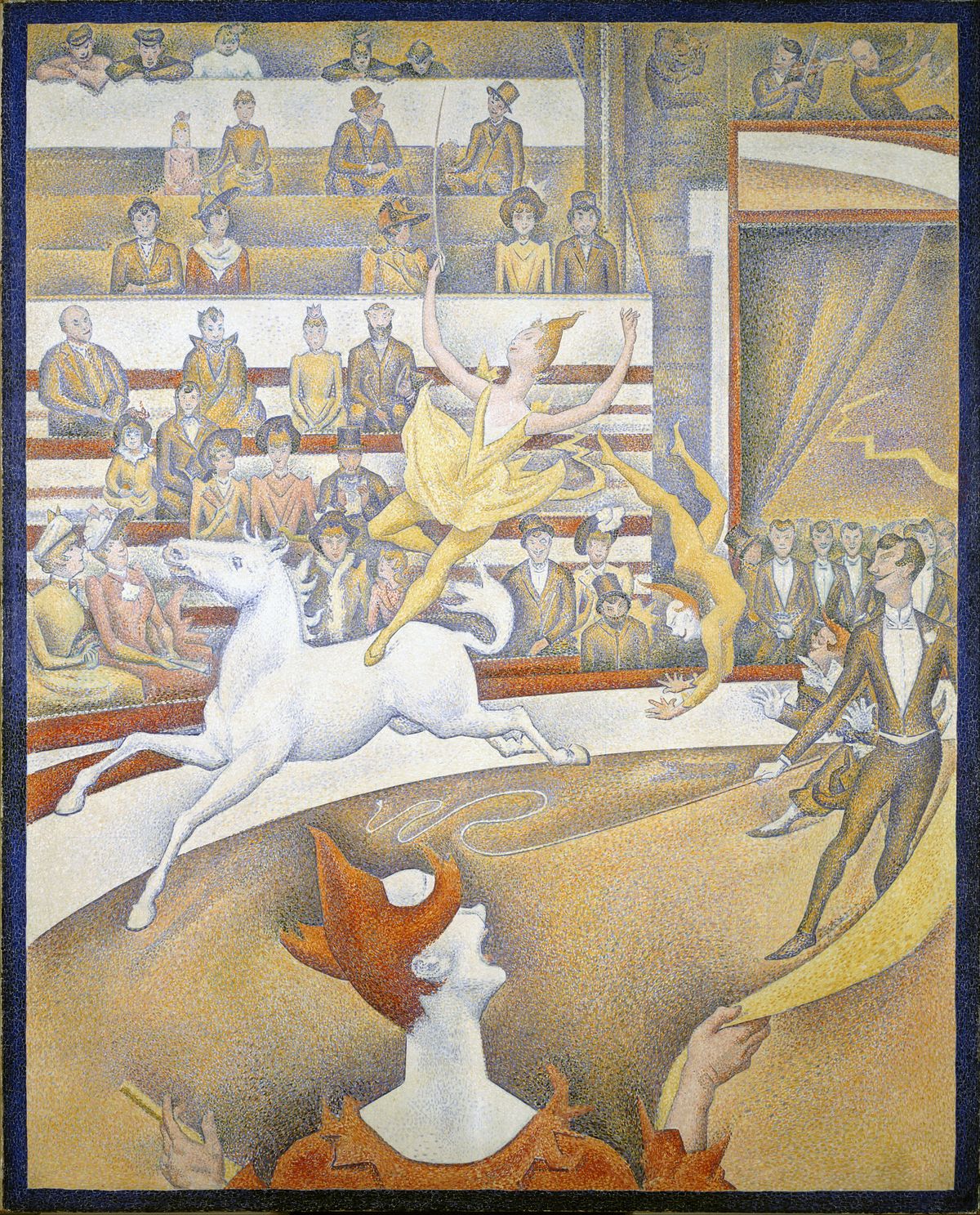
From the mid-1880s a group of painters around Seurat and Signac tried to turn color into a method. They set pure color down in separate touches, guided by the science of their day. Within a few years the approach had followers across France and in Belgium.
- Seurat's large figure paintings, from the riverbank to the circus ring
- Signac, the movement's champion, and the writer who named it
- Followers in France and Belgium: Cross, Luce and Van Rysselberghe
- Neo-Impressionism
- The critic Félix Fénéon's 1886 name for the color method of Seurat, Signac and their circle.
Works in this part
- Bathers at Asnières
- Circus Sideshow (Parade de cirque)
- Le Chahut
- The Channel of Gravelines, Petit Fort Philippe
- The Circus
- Opus 217. Against the Enamel of a Background Rhythmic with Beats and Angles, Tones, and Tints, Portrait of M. Félix Fénéon in 1890
- Evening Calm, Concarneau, Opus 220 (Allegro Maestoso)
- The Evening Air (L'Air du soir)
- The River Sambre in Charleroi
- Maria Sèthe at the Harmonium
Image: Wikimedia Commons · PD-Art