Concept · Relationships
Warm and Cool
Color temperature sorts hues into warm ones, around red, orange and yellow, and cool ones, around green, blue and violet. It always works by comparison.
Any hue can lean either way: a red with a touch of blue looks cool beside a red that leans to orange. Light has temperature too, and painters often see cool shadows under warm light and warm shadows under cool light.
- Set two versions of one hue side by side; which one is warmer shows at once.
- Many painters lay out a warm and a cool version of each primary, so mixtures can lean either way.
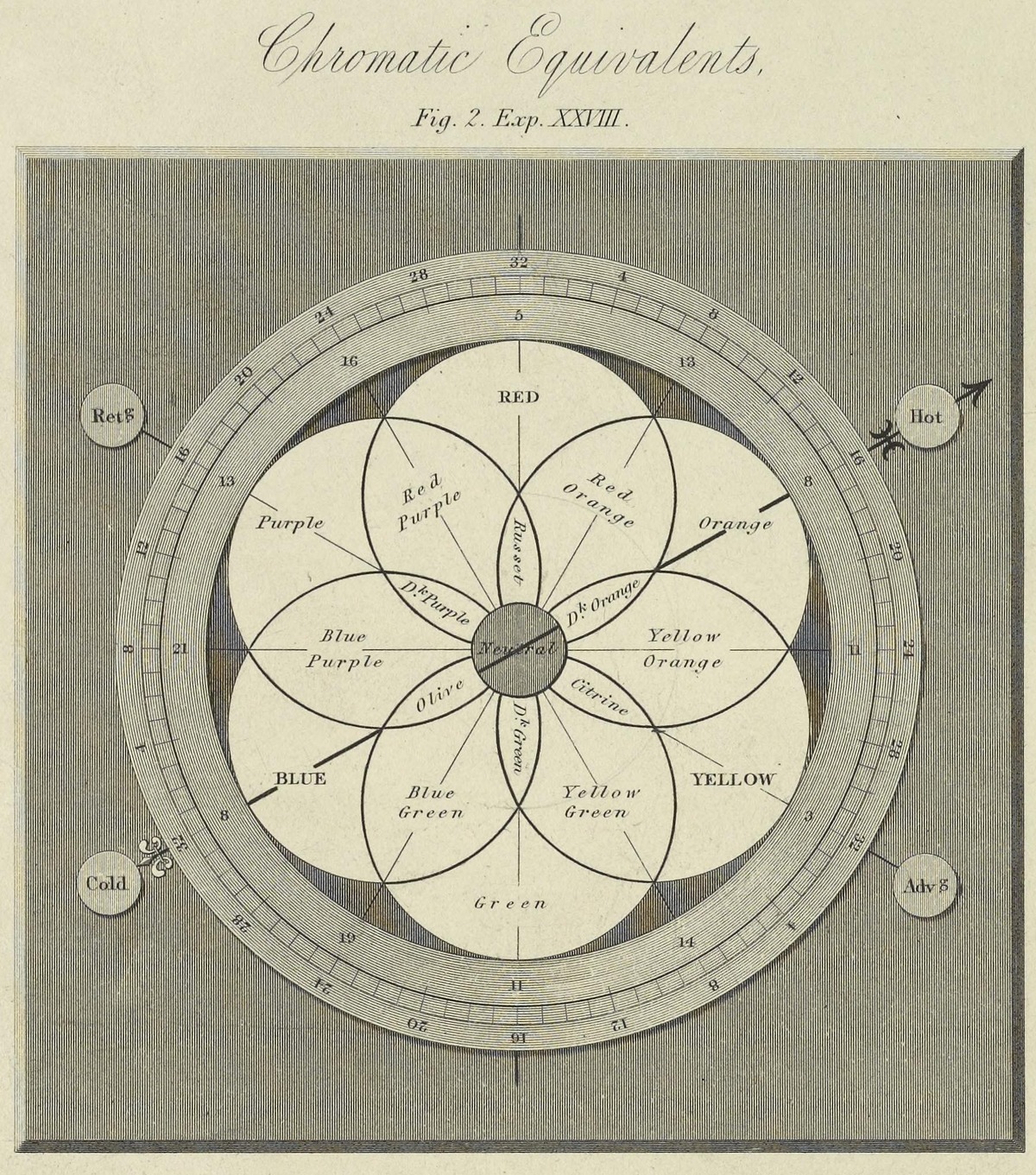
- The split is a convention: George Field's 1835 ring runs it from “Hot” orange to “Cold” blue, and border hues such as yellow-green are disputed.
See
Image: Getty Research Institute via Internet Archive · Public domain