Concept · Relationships
The Bezold Effect
Changing one color in a pattern can shift the look of all the others, seen most clearly when fine lines switch from white to black.
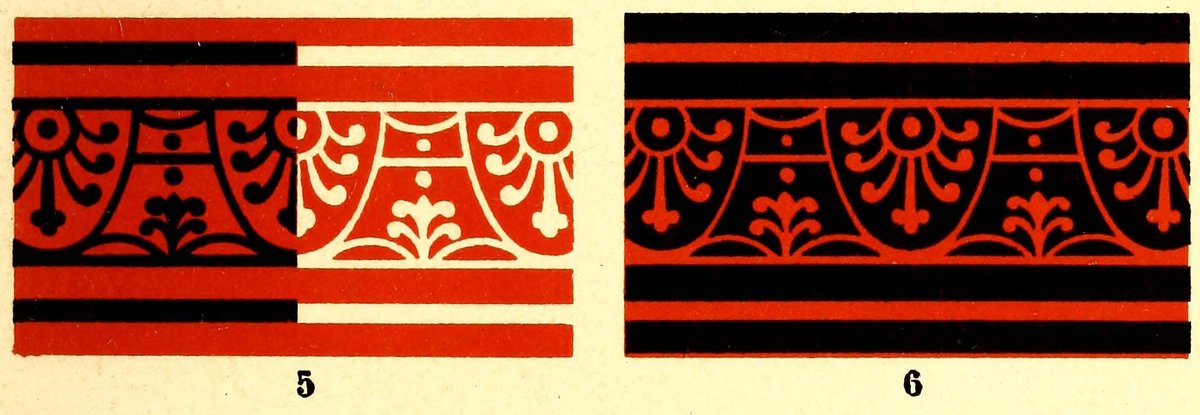
In Fig. 5 of Bezold's plate, from his book on color in art and the decorative trades, one red carries black ornament on the left and white on the right: it reads darker beside black, lighter beside white. In Fig. 6, red ornament on black, it darkens more still. This pull toward a neighbor is called assimilation, or spreading.
- From across the room, the one red splits into a light and a dark version.
- It is the reverse of simultaneous contrast, where a neighbor pushes a color away from itself.
- Changing one thread or outline color can recolor a whole rug or textile design.
Image: Smithsonian Libraries via Internet Archive · Public domain