Concept · Relationships
Simultaneous Contrast
A color seen beside another seems to shift away from it, so two paints can look alike, or far apart, on different grounds.
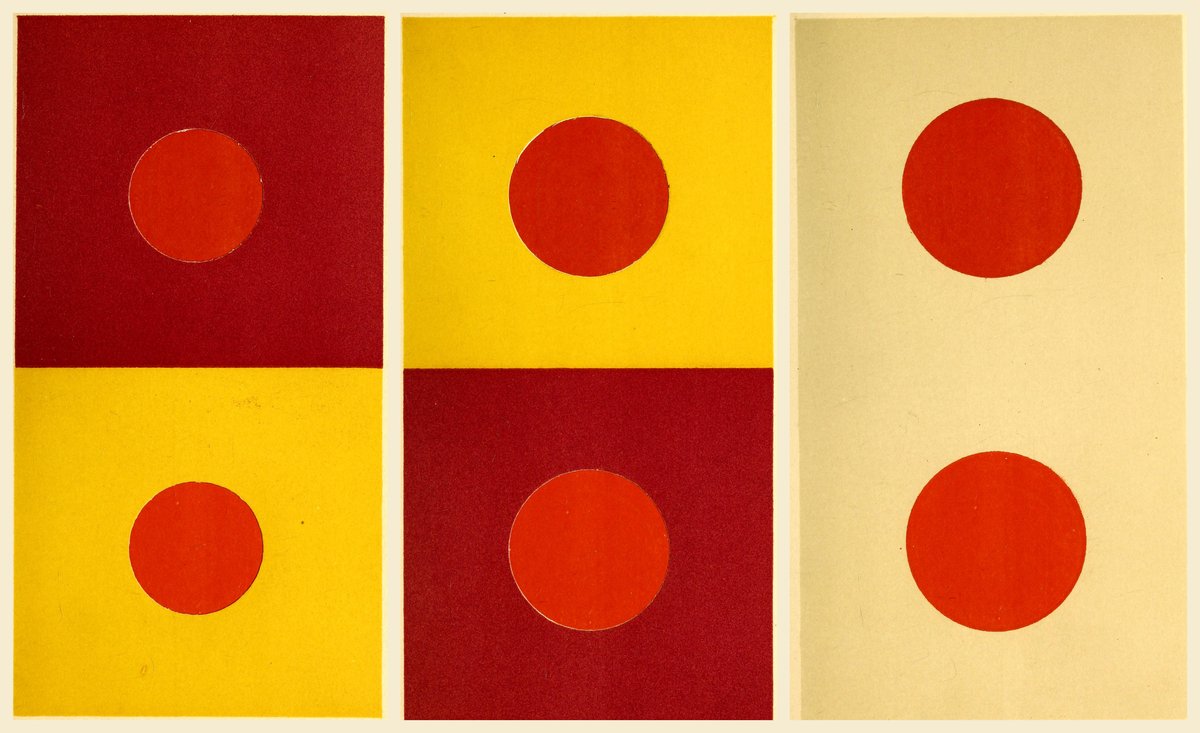
The eye exaggerates differences at a boundary. On Wilhelm von Bezold's 1876 plates, two different reds look nearly alike on his purple (now faded to crimson) and yellow (left); swap the grounds and they split apart (center); on neutral paper their true difference shows (right). How Chevreul came to it is told on Chevreul and Colors Side by Side, in Module 1.
- Mask a color with a scrap of gray card to see it apart from its neighbors.
- Painters judge a mixture on the canvas, beside what will surround it, not on the palette.
- Knowing the two disks differ does not make them look different, even to a trained eye.
Image: Smithsonian Libraries via Internet Archive · Public domain