Concept · Relationships
Optical Mixing
Small touches of different colors, seen from far enough away, merge into one color in the eye instead of on the palette.
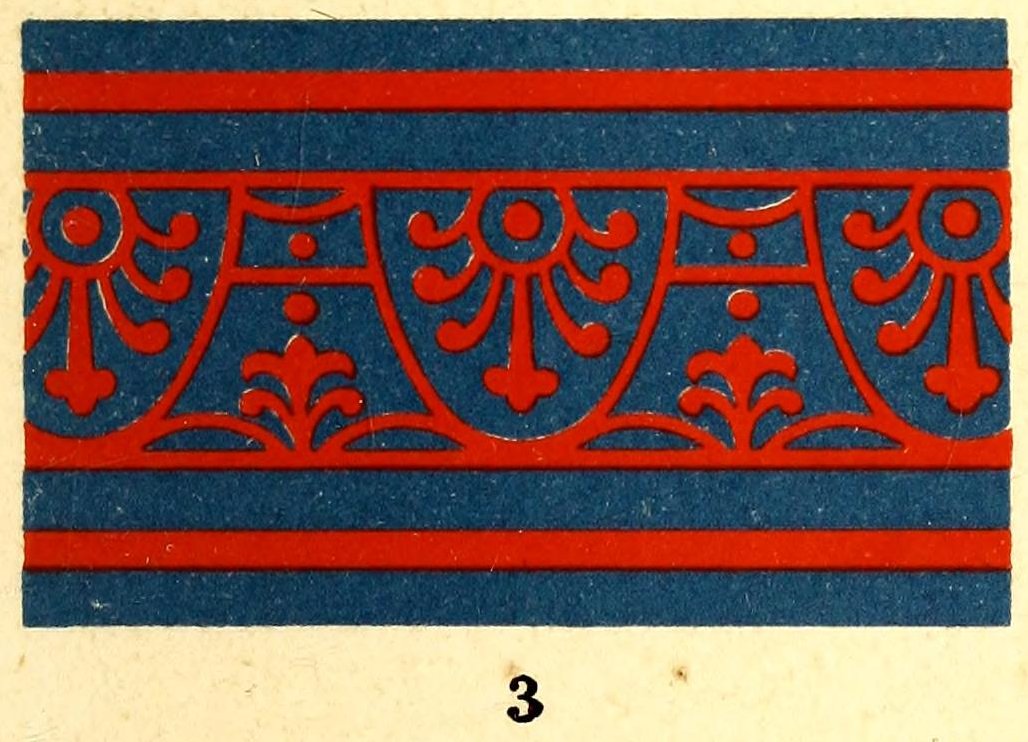
The eye averages the light from each touch, so the result stays lighter than the same paints stirred together. Bezold printed a test case: from a distance, red ornament on blue shows “a tinge of purple,” yet vermilion and ultramarine mixed on the palette make “a dirty reddish brown.”
- Walk toward a dotted passage and watch one color split into its parts.
- Painters set dots or broken strokes side by side to keep mixtures clean and lively.
- Dots of opposite colors tend to average toward gray, so painters after a clean mixture can pair neighboring hues.
See
Image: Smithsonian Libraries via Internet Archive · Public domain