Concept · Relationships
Complementary
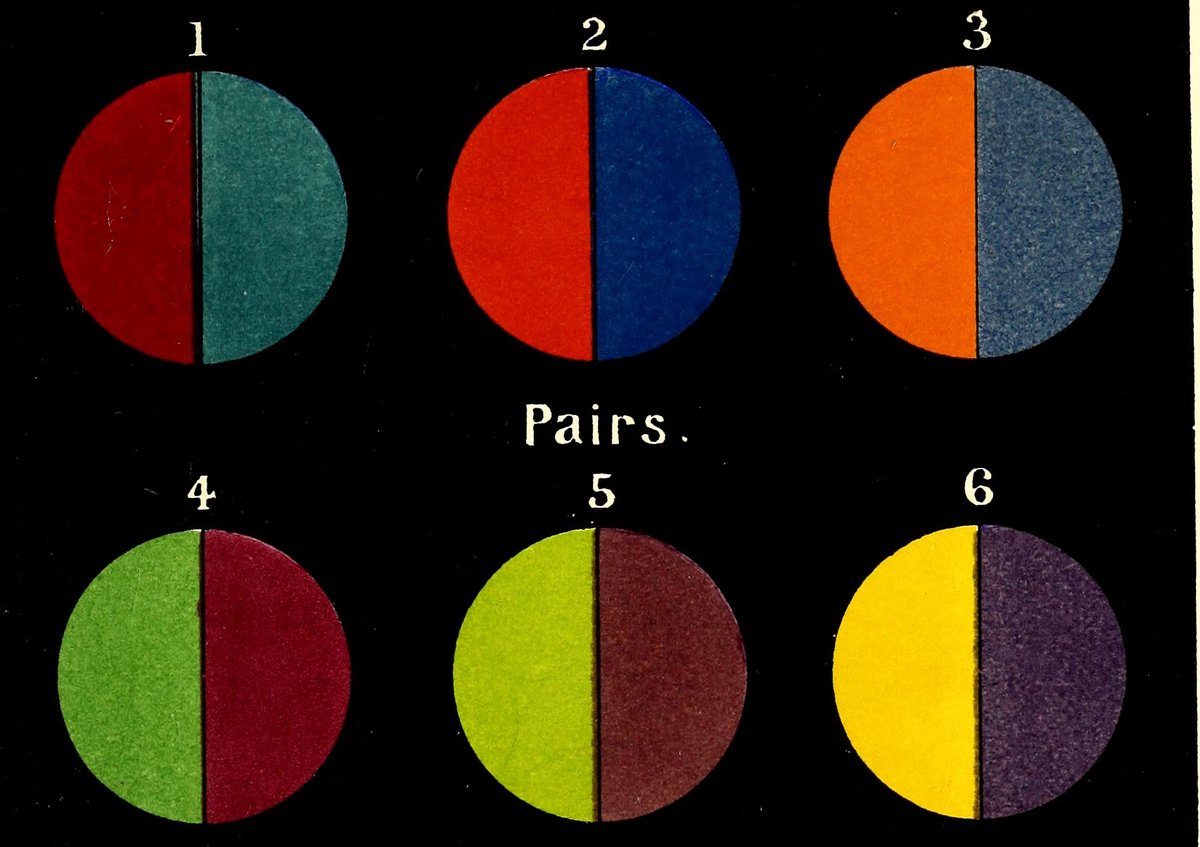
Complementary colors sit opposite each other on the color wheel, and side by side each makes the other look more intense.
Between them, each pair contains all three paint primaries: red is set against green, and green is yellow mixed with blue. Bezold's 1876 pairs sit opposite on his twelve-step circle; he notes only purple and green are true complements of light.
- To spot a pair, find a picture's main hue and look for its opposite elsewhere in the picture.
- Where opposites of matched lightness meet, the edge can flicker; Vibrating and Vanishing Edges explains why.
See
Image: Smithsonian Libraries via Internet Archive · Public domain