Concept · Color in Painting
Local and Expressive Color
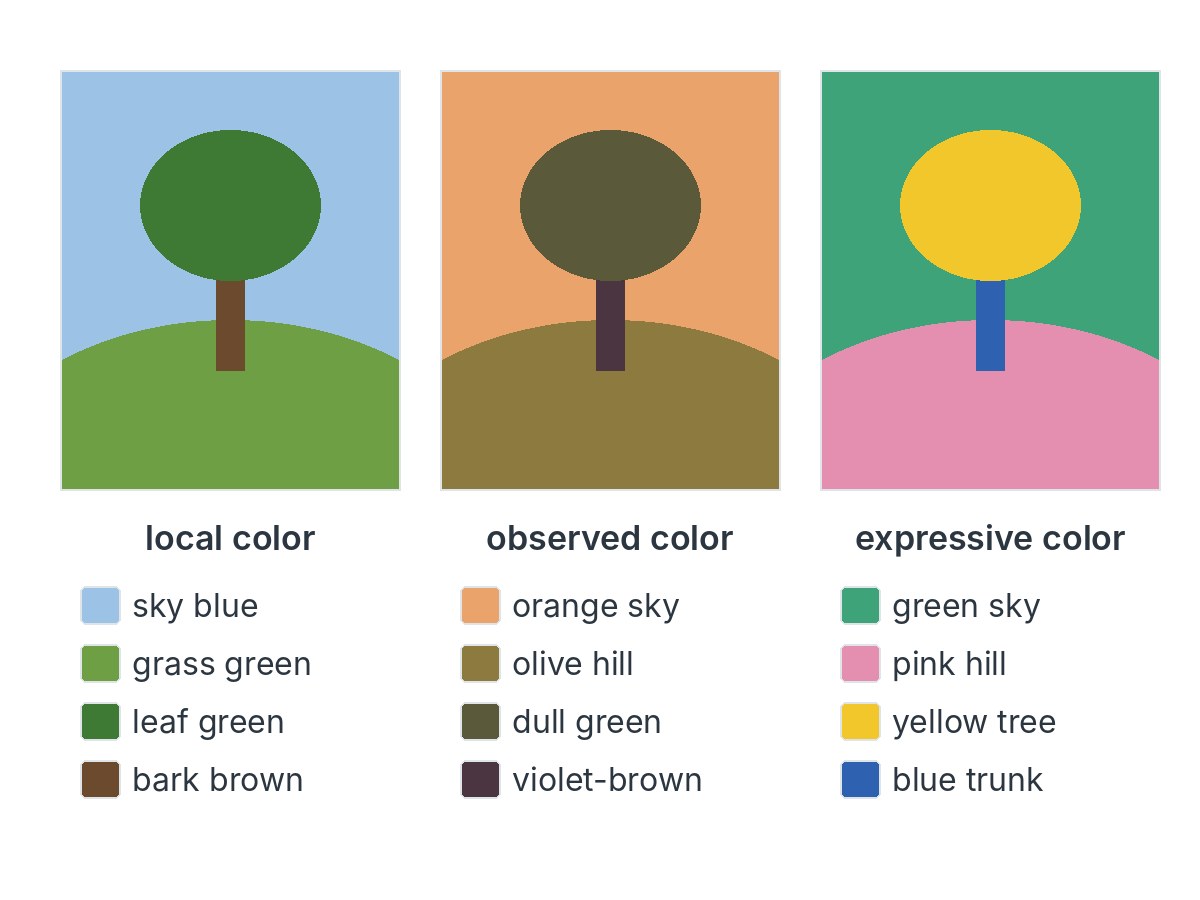
Local color is the color an object has in plain daylight, apart from its surroundings; expressive color is a color the painter chooses for effect, whether or not the object could have it.
Between the two lies observed color: the object as actually lit and changed by its neighbors. Where a painter sits on this range tells the viewer how literally to take the picture.
- Ask whether any real light could produce a color; in ordinary daylight, a pink hill under a green sky could not.
- Painters often keep drawing and values believable while freeing hue, so the scene still reads.
- Local color alone tends to look flat because it ignores light; many painters treat it as a starting point.
See
Image: Made for this site · Original work