Concept · Color in Painting
Color and Symbol
A color becomes a symbol when a culture attaches a set meaning to it, so the color can be read as a sign.
The meaning can come from tradition, from the cost of the material, or both. European painters often gave the Virgin Mary a mantle of ultramarine, the most expensive blue, which honored her and showed what a patron could afford.
- A symbol needs a viewer who knows the code; without it, the same blue is just blue.
- Painters can use a traditional color to name a figure at a glance, before any detail is read.
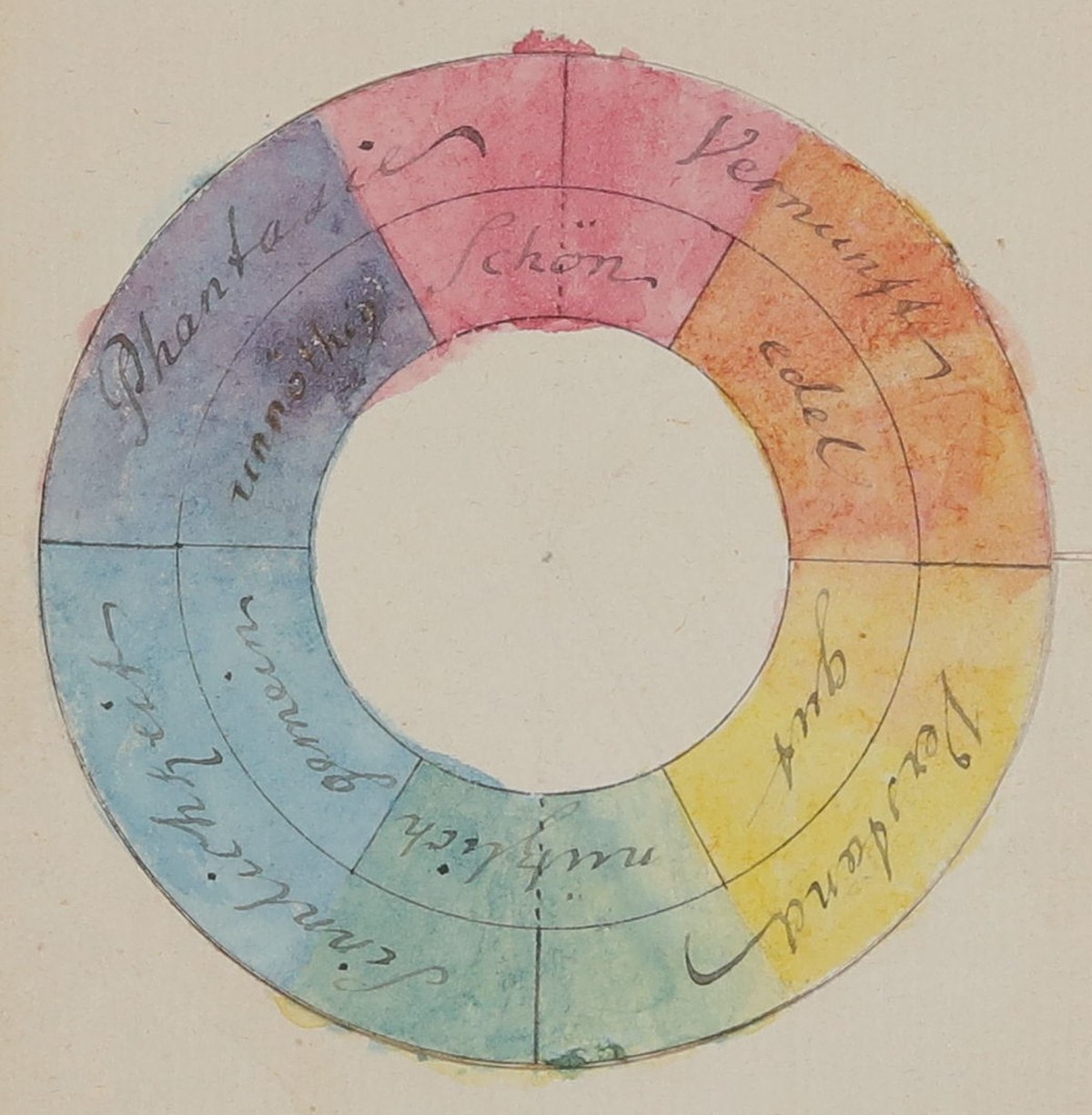
- Meanings differ by culture and period: Goethe's 1809 circle calls red “schön” (beautiful) and blue “gemein” (common).
See
Image: Freies Deutsches Hochstift, Frankfurter Goethe-Museum, via museum-digital:hessen · Public domain (Public Domain Mark)