Concept · Color in Painting
Color and Emotion
Color carries emotion when a painter sets hue, value and saturation to push viewers toward a feeling rather than to describe what is there.
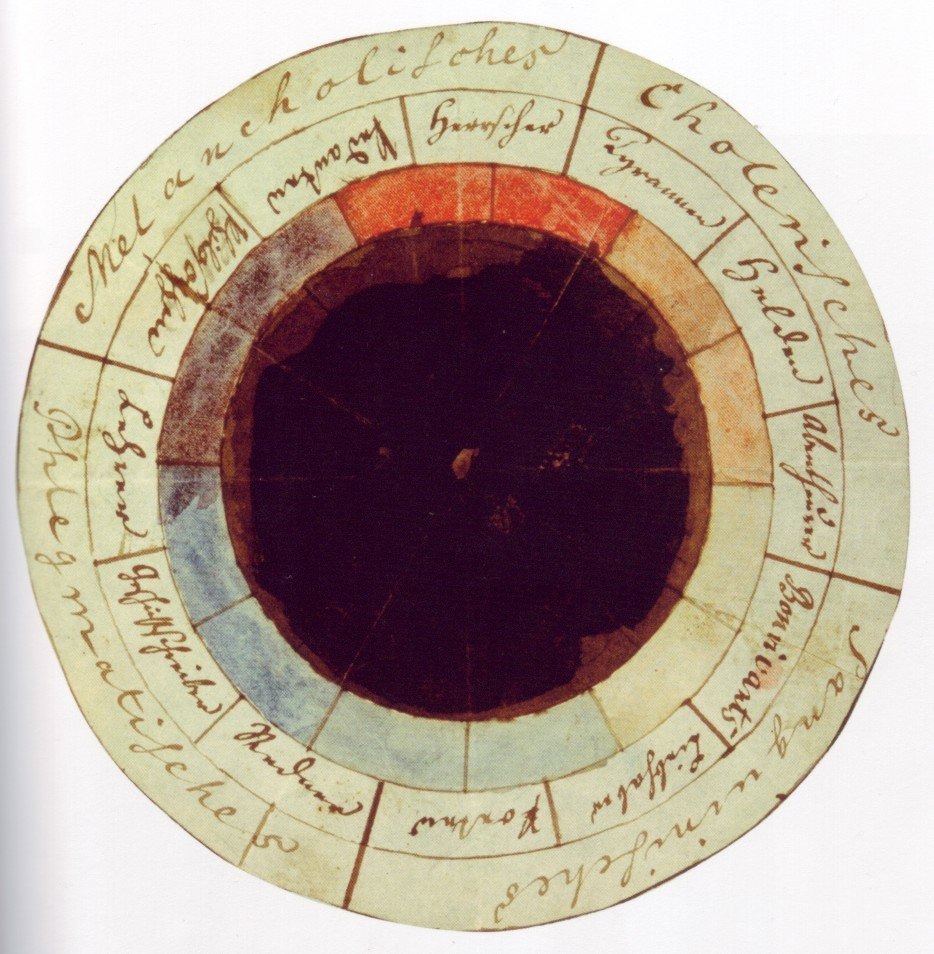
Goethe and Schiller's 1798–99 rose matched hues to temperaments. Yet the effect comes from the whole scheme more than any one hue: how strong the colors are, how far apart their values sit, and whether they clash or settle.
- Cover the subject and ask what the colors alone suggest before reading the story.
- Painters often push one property hard, such as saturation or value contrast, and keep the rest quiet.
- A palette alone rarely fixes a feeling; subject, drawing and title steer how viewers read it.
See
Image: Wikimedia Commons (scan from Biedermeier: Die Erfindung der Einfachheit, Hatje Cantz, 2006, p. 103) · Public domain