Modern Life
Degas: Movement, Work and the Body
Dancers, laundresses, jockeys and bathers, seen from odd angles.
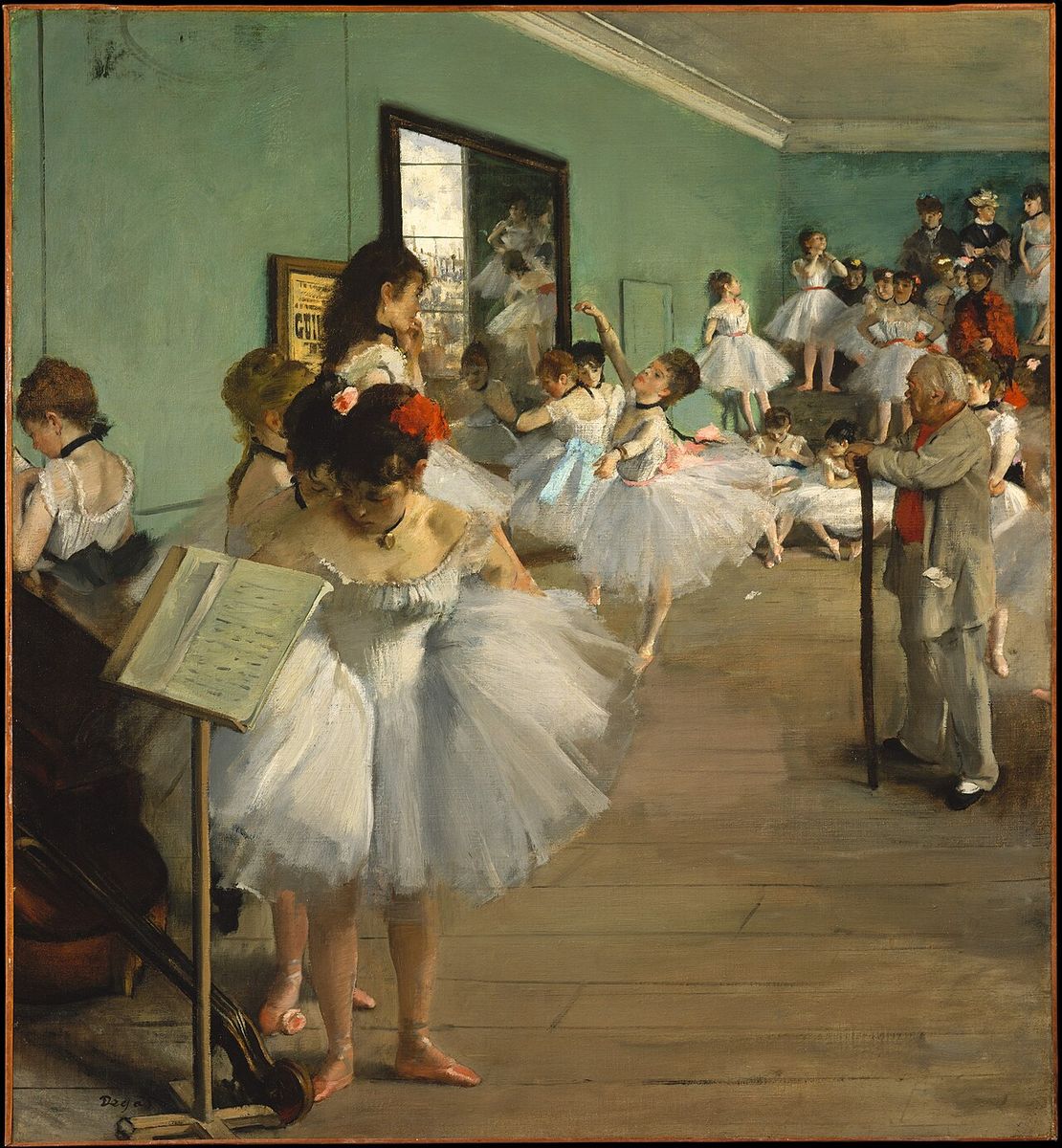
Edgar Degas showed at nearly every Impressionist exhibition, but he worked mainly indoors, from drawings, models and memory. He painted ballet pupils, a laundress, jockeys, an acrobat and bathers, returning to these themes for more than thirty years. The works here show the Impressionist traits of modern subjects, passing moments, unusual viewpoints and close study of light.
- He sent work to the official Salon in the 1860s, then joined the independent exhibitions in 1874.
- The Paris Opéra was his most frequent setting: first the old house, which burned in 1873, then the new Palais Garnier.
- He used the group shows to test new kinds of work: a wax figure in 1881, pastel nudes in 1886.
- Some works, such as the steeplechase scene and Four Dancers, stayed in his studio until his estate sales in 1918.
- pastel
- Sticks of powdered color, used like chalk; Degas often layered it over a print.
- petit rat
- Nickname for a pupil of the Paris Opéra ballet school.
Works in this part
- The Dance Class
- The Rehearsal of the Ballet Onstage
- Ballet (The Star)
- Little Dancer Aged Fourteen
- Miss La La at the Cirque Fernando
- Woman Ironing
- Scene from the Steeplechase: The Fallen Jockey
- Woman Bathing in a Shallow Tub
- The Tub
- Four Dancers
Image: The Metropolitan Museum of Art Open Access · CC0