Late Impressionism
Claude Monet
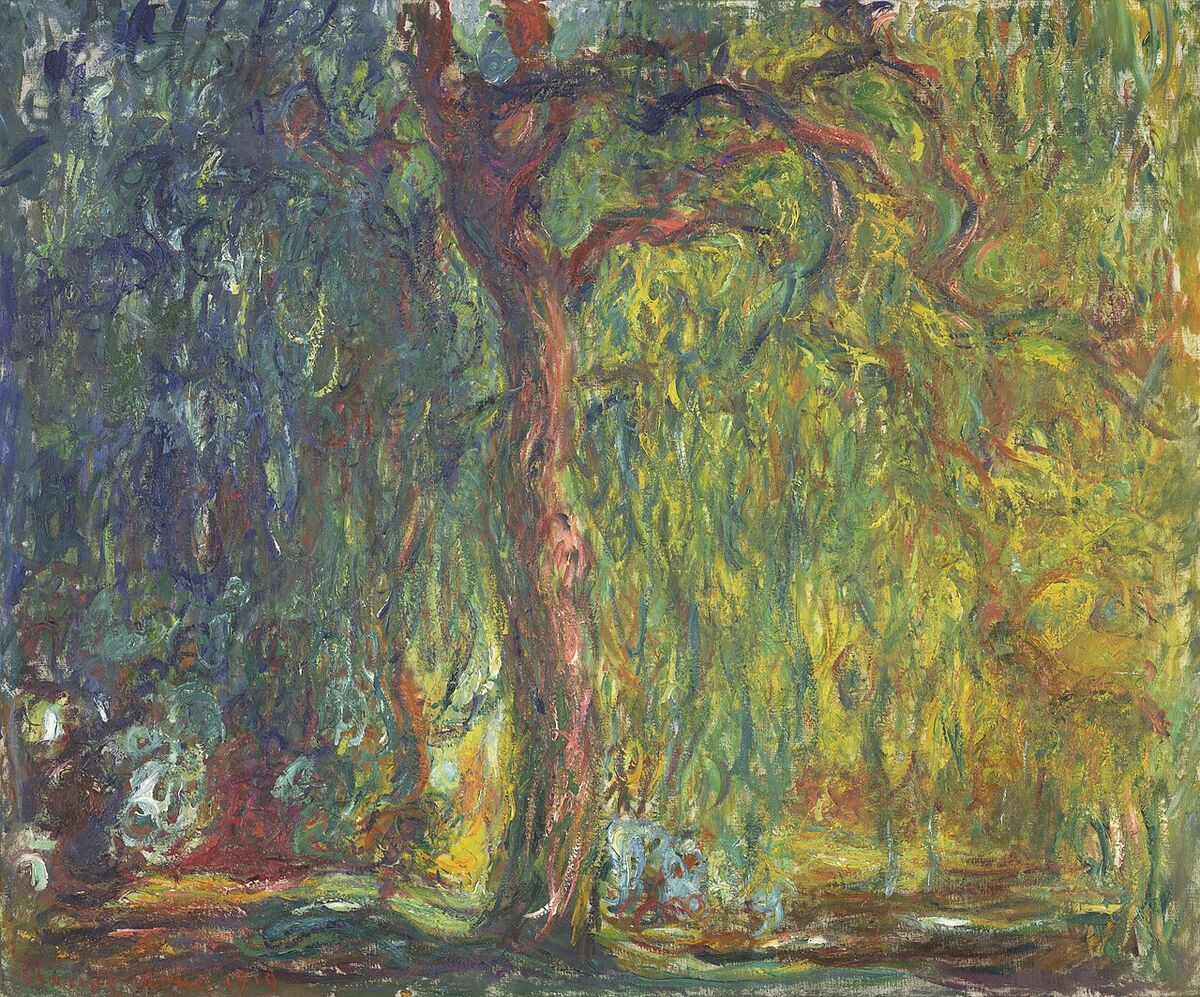
Weeping Willow
1918–19
Oil on canvas, 99.7 × 120 cm. Kimbell Art Museum, Fort Worth
The twisting trunk and hanging branches of a willow beside Monet's water garden, in shifting greens, yellows and blues. It is one of ten willow pictures Monet completed by 1919.
- The museum reads the curling strokes and shadowy color as grief for the war years. Monet's late brushwork moves from recording light, the Impressionist aim, toward expressing feeling.
- The willows are among the few easel-size pictures Monet made after 1914.
- The war emptied Giverny of most of his family and staff, but Monet stayed on.
- He built the picture in layers, and in the foliage he scraped paint away.
- Kojiro Matsukata owned it by 1924; the Kimbell bought it in 1996.
This willow stood on the bank of the lily pond. Its trunk and reflection reappear in the huge water-lily panels that occupied Monet until his death in 1926.
Image: Wikimedia Commons · Public domain