Greece to Paris, 530 BCE–1890
Roman, after a Greek bronze
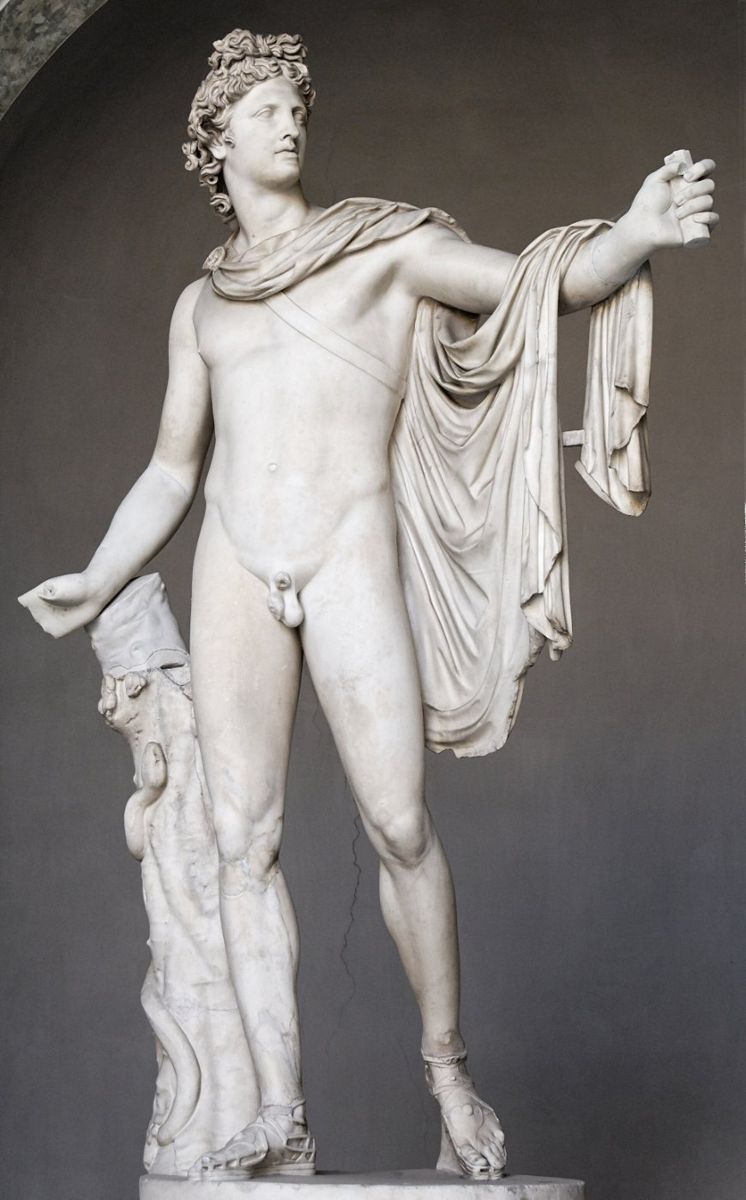
Apollo Belvedere
early 2nd century CE
Marble. Vatican Museums, Vatican City
Look at the line of the body: it bends in a slow S from the turned head down through the hip to the back foot.
Look at
- The head turns one way while the outstretched arm reaches the other, so the figure twists instead of facing you square.
- One leg carries the weight and the other trails, which tips the hips and starts the curve.
- The cloak hangs from the shoulder in deep, shadowed folds that set off the smooth skin beside them.
- The surface is worked to an even white, and the face stays calm; nothing in the carving suggests effort.
- A Roman copy of a Greek bronze of about 330 BCE. Apollo has just loosed an arrow; the outstretched hand once held the bow.
Image: Wikimedia Commons · Public domain (photographer's release)