Greece to Paris, 530 BCE–1890
Greek, sculptor unknown
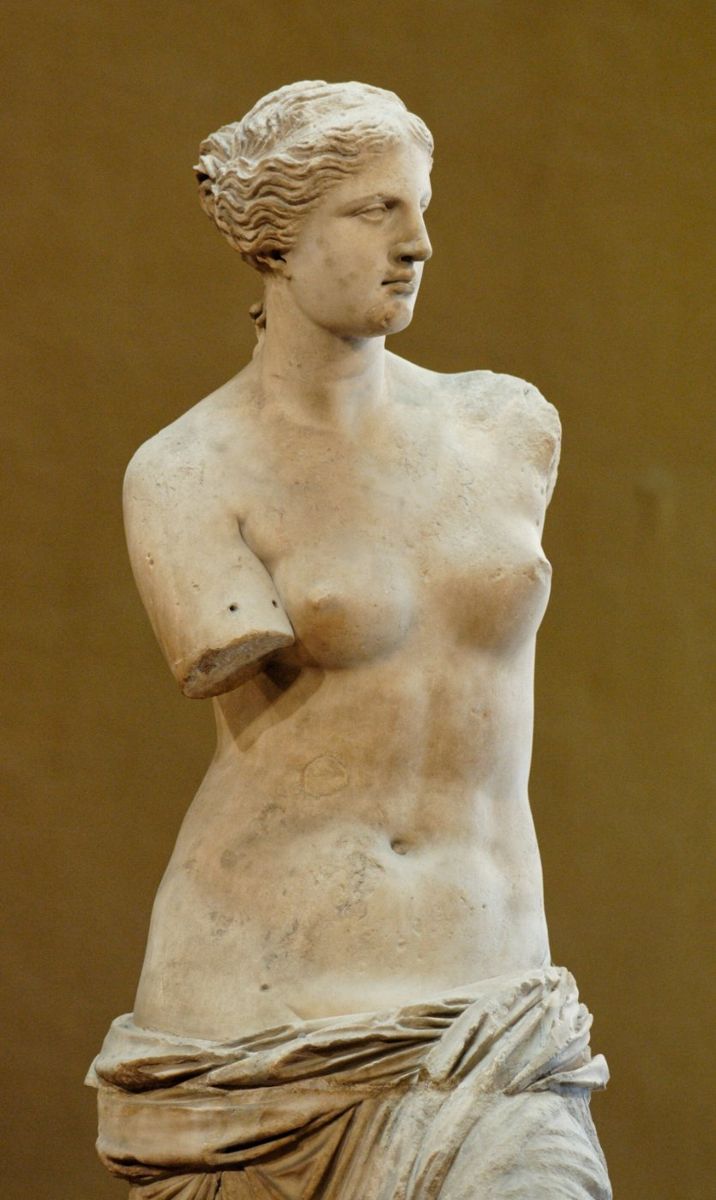
Venus de Milo
about 150–125 BCE
Parian marble, 80 1/4 in. high. Louvre, Paris
Look at the twist: the hips turn one way and the shoulders the other, so the figure is a spiral you have to walk around.
Look at
- The weight is on one hip, so the stomach curves and one side of the waist folds in.
- The torso is carved as rounded, weighty masses, with soft transitions and no hard edges.
- The cloth bunches in thick ridges at the hips, a heavy block that holds the smooth body above it up.
- The skin surface is slightly grainy, so it catches light more gently than a polish would.
- Carved in two blocks joined at the hips. Both arms are missing, all but a stub.
Image: Wikimedia Commons · Public domain (photographer's release)