Concept · Aging and Analysis
Fading and Darkening
Some pigments change color because they react with light, air or the oil around them.
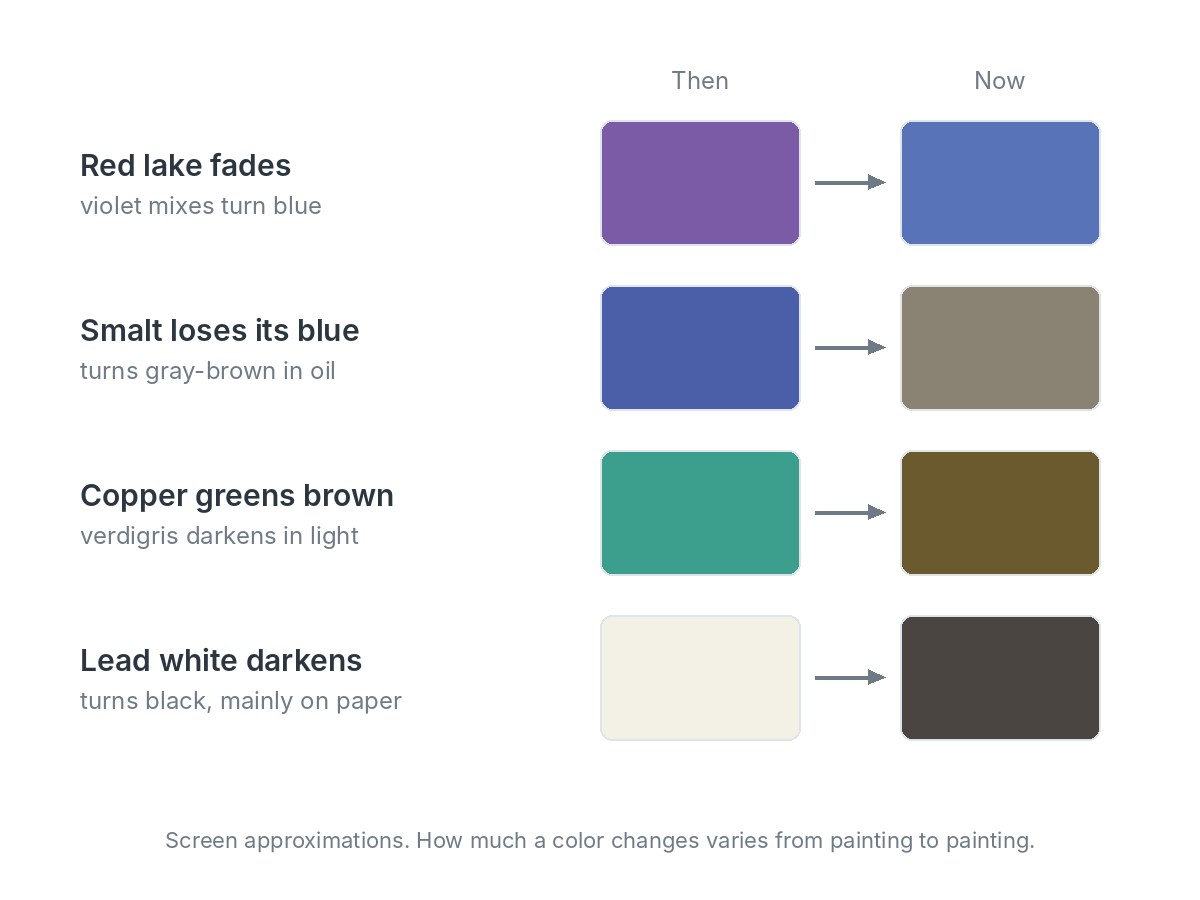
Red lakes fade in light; see Color Theory, How Pigments Behave. As potassium seeps out of smalt's glass into the oil, the blue fades and the oil yellows, leaving gray-brown. Copper greens darken in light. Lead white can turn black in polluted air, mainly on paper and in water-based paint.
- Copper greens hidden under a frame often stay green.
- Chrome yellow can darken too: a 2011 X-ray study of two Van Gogh paintings found light had likely altered a thin surface layer.
- Darkened lead white on drawings can be turned white again with hydrogen peroxide, though it may darken again.
See
Image: Made for this site · Original work