Landscape and the Sublime
Charles Barry and A.W.N. Pugin
Palace of Westminster (Houses of Parliament)
designed 1836; built 1840–c. 1870
Architecture, Perpendicular Gothic style. Westminster, London
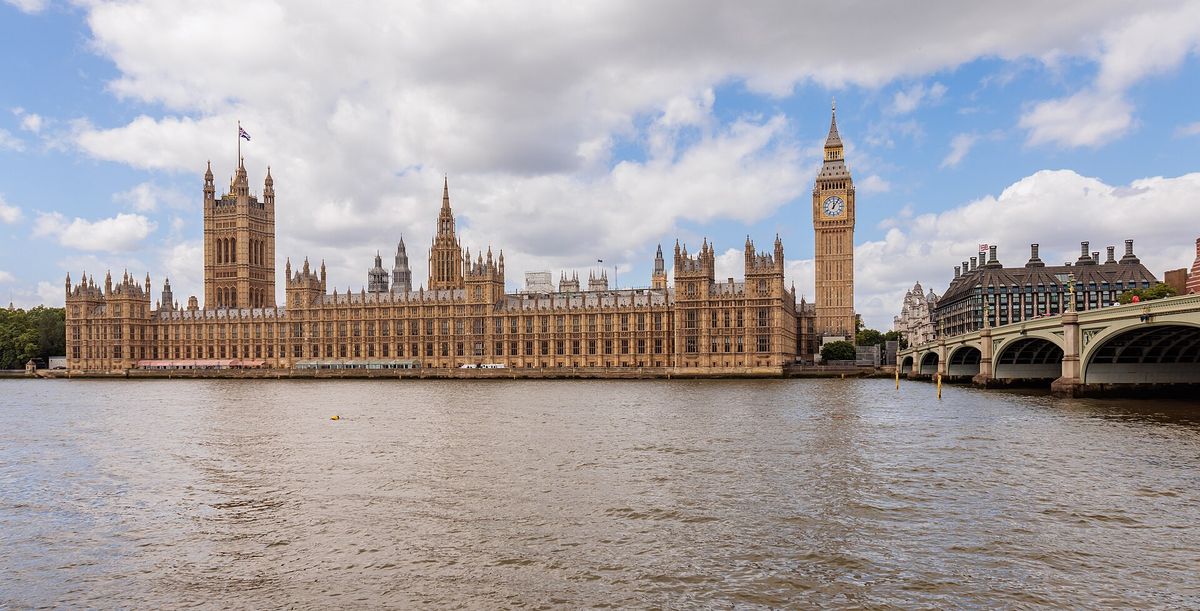
After the fire of 1834, Parliament was rebuilt as a vast complex on the Thames, keeping the surviving medieval Westminster Hall. Its towers and river front became a symbol of Britain itself.
- A commission of 1835 required a Gothic or Elizabethan design; Barry's entry won the 1836 competition from 97 entries.
- Look at the river front: rows of narrow vertical panels and pinnacles in late medieval style, with the clock tower at one end.
- Barry was the architect; Pugin designed the Gothic detailing and interiors, down to furniture and small metalwork.
- The Gothic requirement tied the nation's government to its medieval past rather than to the Greek and Roman models usual for public buildings. Romantic interest in history became a national style.
- The Lords first sat in their new chamber in 1847 and the Commons in 1852; E. M. Barry finished the work about 1870.
- Gothic Revival
- The reuse of medieval Gothic forms, such as pointed arches and pinnacles, in buildings of the 1700s and 1800s.
Image: Wikimedia Commons · CC BY 2.0