Greece to Paris, 530 BCE–1890
Peter Paul Rubens
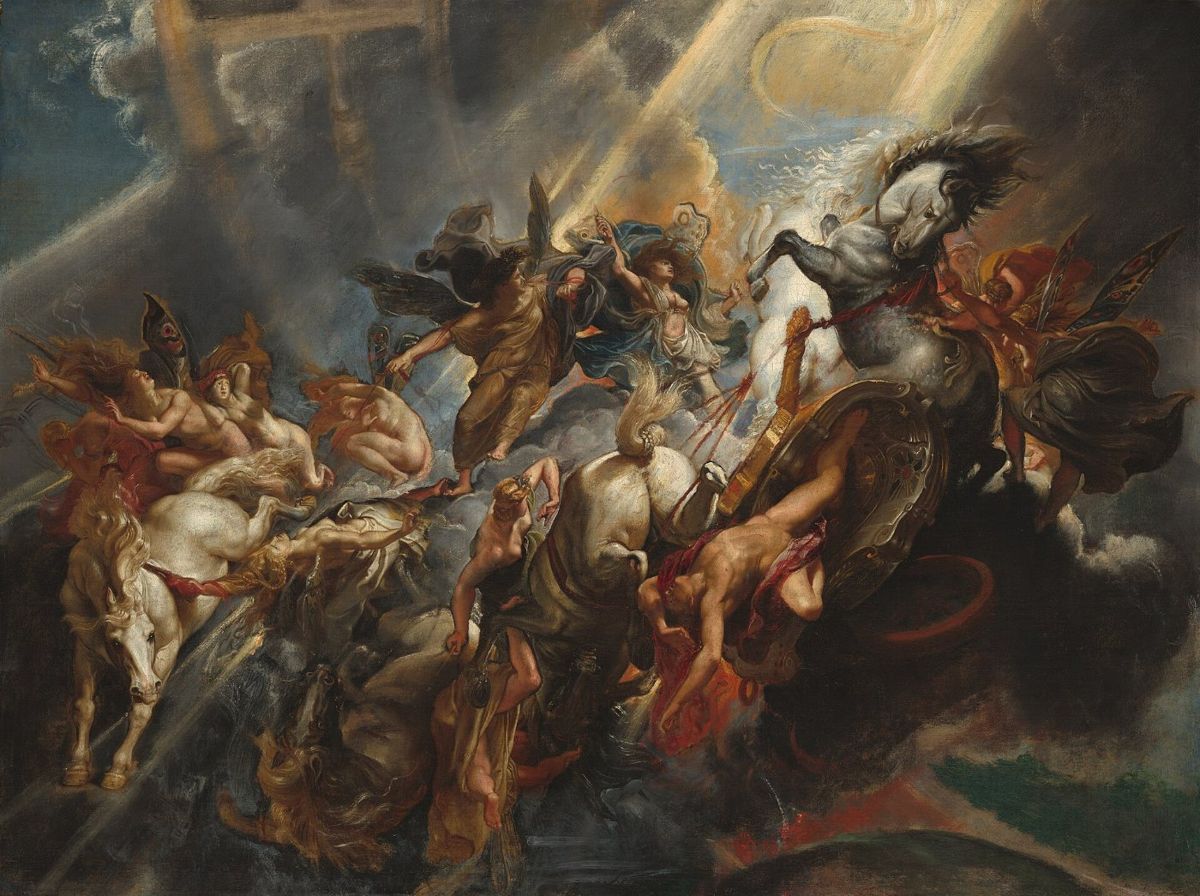
The Fall of Phaeton
about 1604–05, probably reworked about 1606–08
Oil on canvas, 38 3/4 × 51 1/2 in. National Gallery of Art, Washington
Peter Paul Rubens (Flemish, 1577–1640). Look at the composition: everything tumbles along one diagonal, from the rearing horse at upper right down to the tangle of horses at lower left.
Look at
- Horses, chariot and bodies are bunched into a single swirling mass with no still point.
- Shafts of light cut across the scene from the upper right, slicing through the clouds.
- Figures at the edges are cropped by the frame, as if the action spills out of the picture.
- The paint is thin and sketchy in the clouds and thicker on the horses, so the centre has the most weight.
- The sun's chariot breaks apart; the butterfly-winged women at left are the seasons, in terror.
Image: Wikimedia Commons (CC0 file from the National Gallery of Art's open-access release) · CC0