History · The Painter's Colors
The Chemist's Palette
After centuries with few new colors, chemistry began producing them, most of them after 1800.
Prussian blue came first, found by accident in Berlin early in the 1700s. The rest came in a rush after 1800; several, such as cadmium yellow, came from metals discovered around that time.
- Synthetic ultramarine is chemically the same as the natural pigment but far cheaper, so the costliest blue became an everyday one.
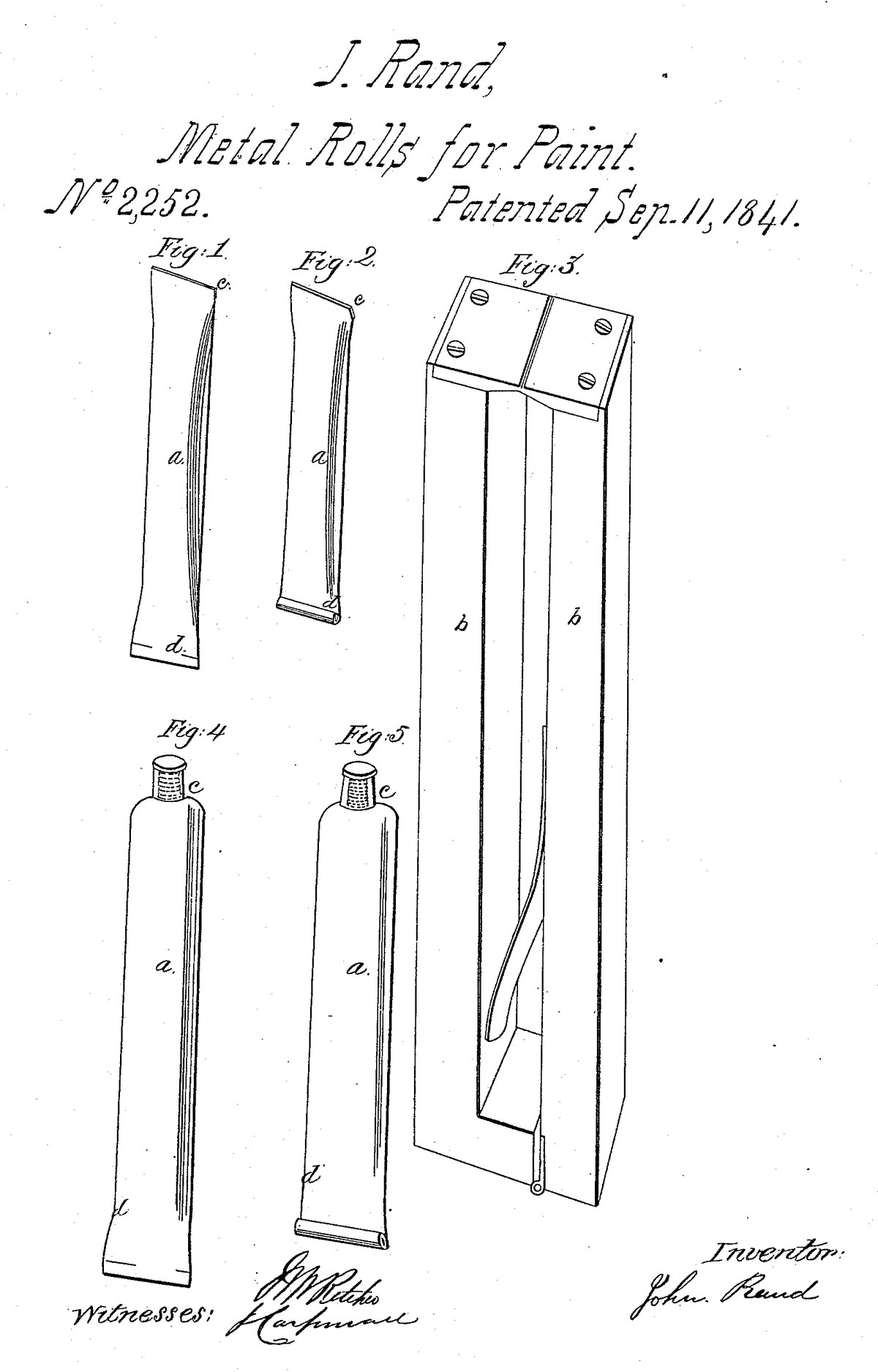
- The patent drawing shows the collapsible tin tube (1841) of John Goffe Rand, an American portrait painter; it replaced paint stored in pig bladders.
Image: US Patent and Trademark Office (via Google Patents) · Public domain