Concept · The Painter's Colors
Blues
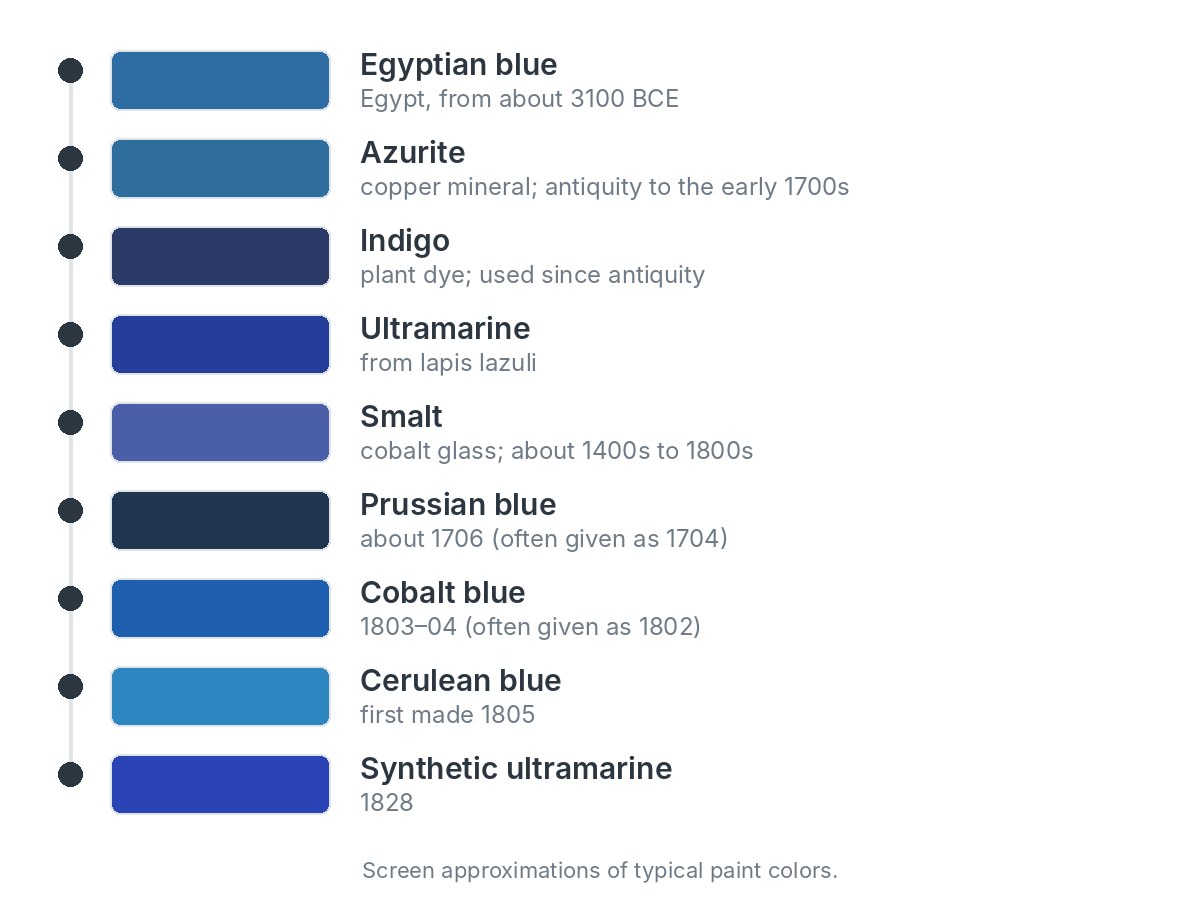
From the Middle Ages to 1700, painters had only a few blues: azurite, ultramarine, smalt (powdered cobalt glass) and indigo, a plant dye.
Each had a weakness. Ultramarine survives light and lime, so it works in fresco, but acid destroys it. Azurite can turn green, and smalt can lose its color in oil (see Fading and Darkening).
- Violet pigments came late (cobalt violet 1859, manganese violet 1868). Before that, painters mixed purples, such as lake with ultramarine.
See
Image: Made for this site · Original work