Concept · Paint and Its Surface
Fresco
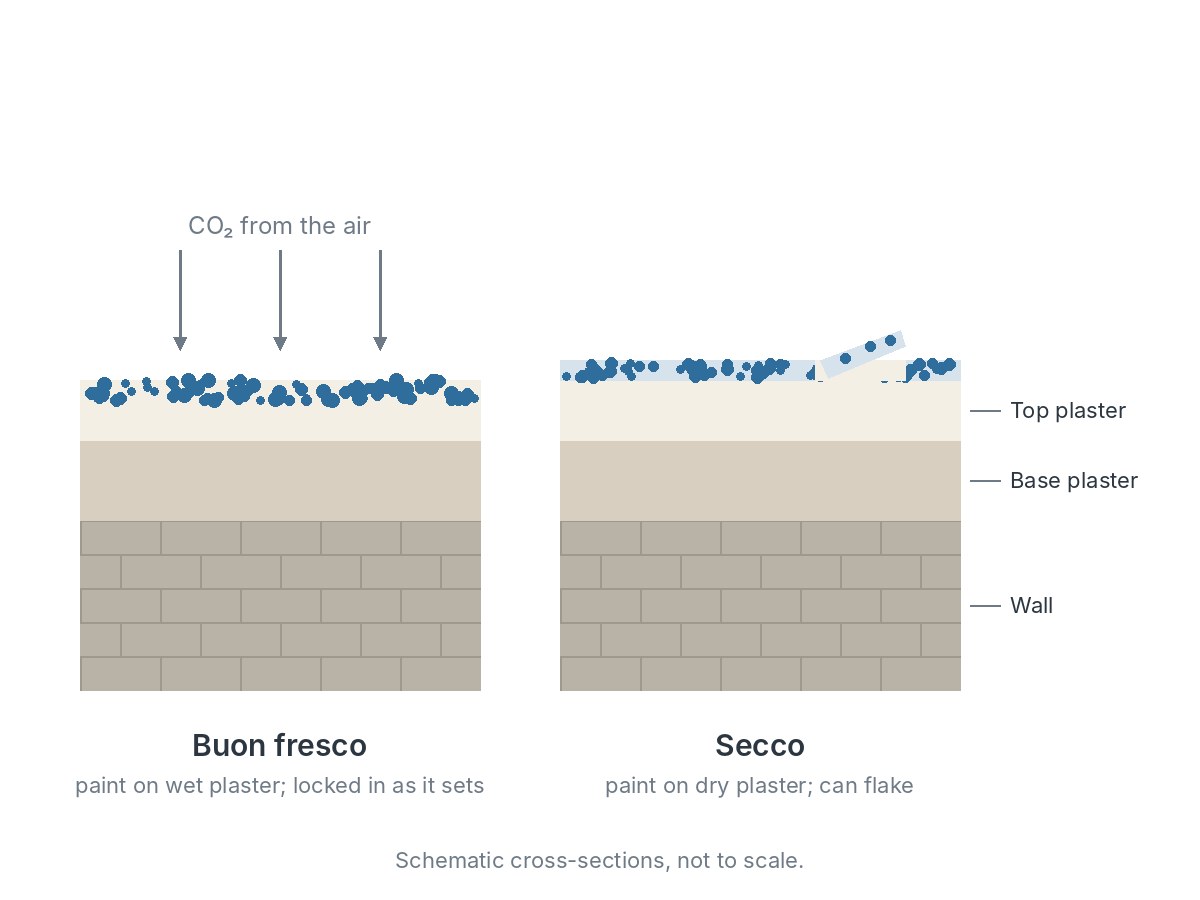
In fresco the painter works on lime plaster while it is still wet; as it sets, the color becomes part of the wall.
Follow the arrows: carbon dioxide from the air turns the lime back into a kind of stone, with the color inside it. Paint added once the plaster has dried, called secco, rests on the surface and may flake off.
- Each day's patch of fresh plaster, a giornata, was only as big as the painter could finish before it dried.
- Not every color suits wet lime: Pliny says indigo does not.
See
Image: Made for this site · Original work