Gods and stories
Peter Paul Rubens
Juno and Argus
c. 1610
Oil on canvas, 249 × 296 cm · Wallraf-Richartz-Museum, Cologne
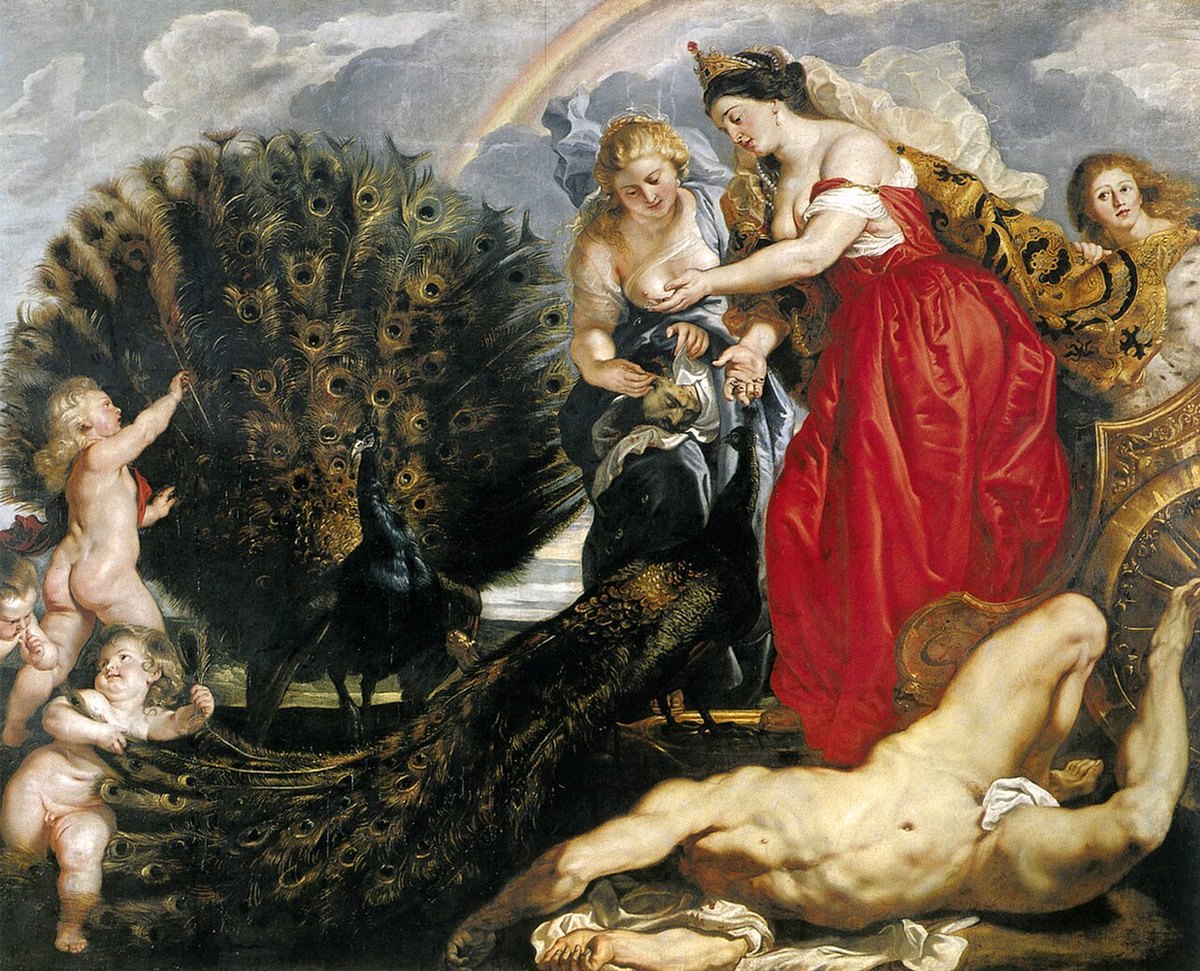
Painted soon after Rubens came home to Antwerp from eight years in Italy, this big canvas shows Juno turning a dead guardian’s eyes into the peacock’s tail. It is a showcase for the Venetian colour Rubens had just studied.
- Juno lifts the eyes from the headless body of Argus, helped by Iris, goddess of the rainbow, and a crowd of putti.
- A rainbow runs through the centre; the museum notes the picture is built on blue, yellow and red.
- Its design echoes the title page Rubens drew for a 1613 book on optics.
- Given to the museum in 1894 by a group of Cologne art lovers; the original patron is not known.
Hera (Roman Juno) is queen of the gods and goddess of marriage. She set hundred-eyed Argus to guard Io, one of Zeus’s loves; when Hermes killed him, she placed his eyes on her sacred bird, the peacock.
Image: Wikimedia Commons · Public domain