Heroes and Troy
Glykon of Athens, after Lysippos
Farnese Hercules
2nd–3rd century CE
Pentelic marble, 317 cm high · National Archaeological Museum, Naples
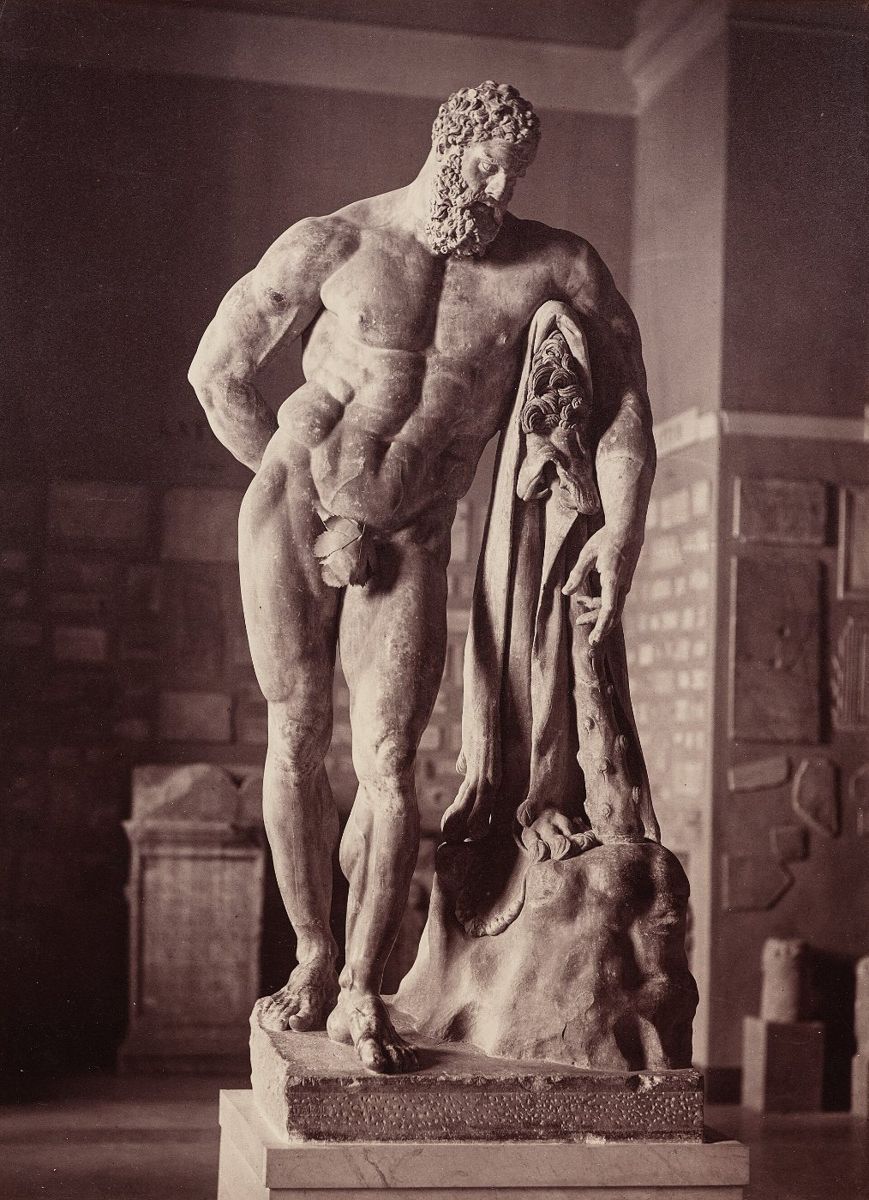
An enlarged Roman copy, signed by Glykon of Athens, of a 4th-century BCE bronze attributed to Lysippos. It was found in 1546 in the Baths of Caracalla in Rome, where it was probably displayed.
- A colossal, heavily muscled hero leans on his club, small head bowed.
- His right hand, behind his back, holds the golden apples of the Hesperides, his last labour.
- It entered the Farnese collection and moved with it to Naples.
- The photograph shown is by Giorgio Sommer, about the 1860s.
Heracles (Roman Hercules), son of Zeus, performed twelve labours to atone for killing his family in a madness sent by Hera.
Image: Wikimedia Commons · CC0