Gods and stories
Hellenistic sculptor
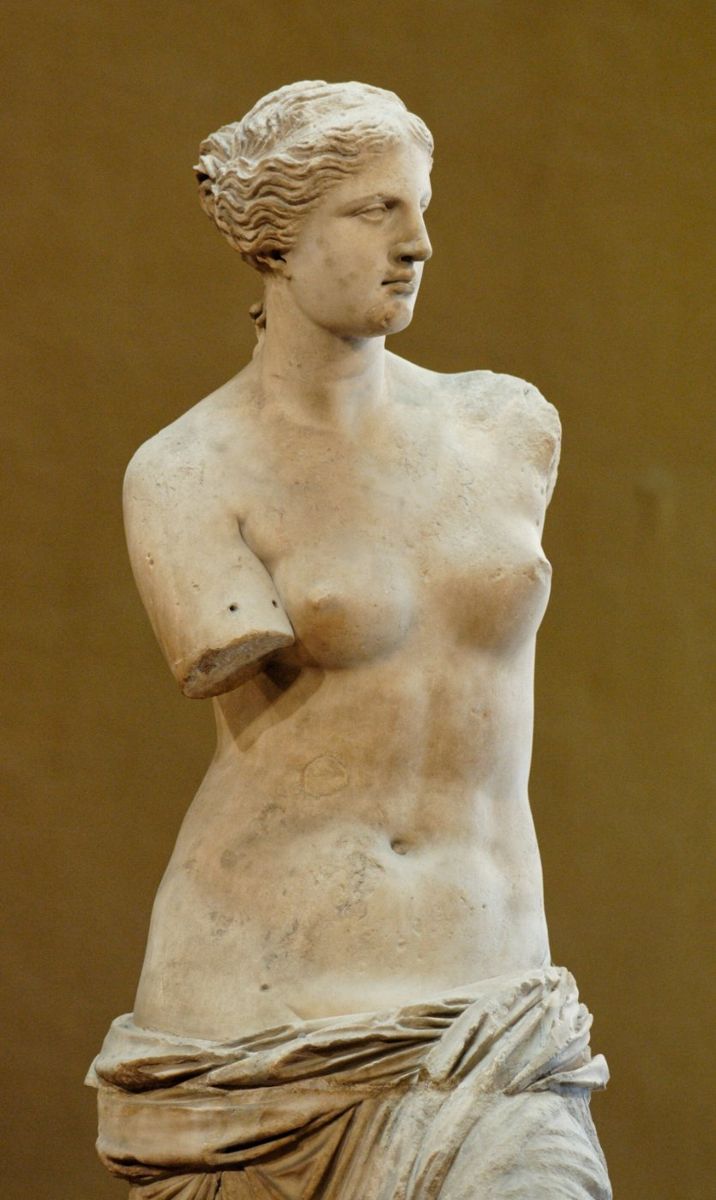
Venus de Milo
c. 150–100 BCE
Parian marble, 204 cm high · Louvre, Paris
Found by a farmer on the island of Melos in April 1820, bought by the French ambassador, and given to Louis XVIII, who gave it to the Louvre in 1821. It is the most famous Aphrodite to survive from antiquity.
- Carved in two blocks joined at the line of the drapery around the hips.
- Drill holes once held metal jewellery, such as a bracelet.
- The arms were never found; proposals include an apple or a shield used as a mirror.
- Found with an inscription from a gymnasium, but where it stood is unknown.
Aphrodite was worshipped across the Greek world. Late Hellenistic sculptors showed her half-draped, a type that begins with Praxiteles’s famous nude Aphrodite of Knidos.
Image: Wikimedia Commons · Public domain